
The work of Jan Ijäs (b. 1975) comprises around 30 short films and one documentary feature, spanning experimental cinema, visual art and poetic documentary. Shot predominantly on 16 mm and 35 mm film, his works find in the material qualities of the medium a counterpoint to the geographical and narrative scope of a practice that moves between film festivals, museums and galleries. His works are held in the collections of the Saastamoinen Foundation, the Finnish National Gallery, the Helsinki Art Museum, and the Jenny and Antti Wihuri Foundation, among others.
An essayistic impulse runs through much of his work: to uncover something unexpected in phenomena we tend to overlook precisely because they are so closely woven into everyday life. The “Waste” series is central to this approach, questioning the instability of value and the processes through which something once treasured becomes waste, before potentially finding a renewed purpose or meaning.
In “Waste no.1 Money” (2017), the first film in the series, Ijäs observes Western banknotes being washed with Omo detergent in a Zimbabwe marked by economic collapse. The humour of the situation contrasts with the difficulties of filming under Robert Mugabe’s dictatorship. In “Waste no.6 How Great”, the question becomes more ambiguous: what constitutes waste, technology or knowledge itself? The film moves from a toxic electronic waste dump in Ghana, known as “Sodom and Gomorrah”, to a rehabilitation centre for young people addicted to smartphones in South Korea. In Turkey, a library created by waste collectors from discarded books offers a possibility of recovery and shared access.
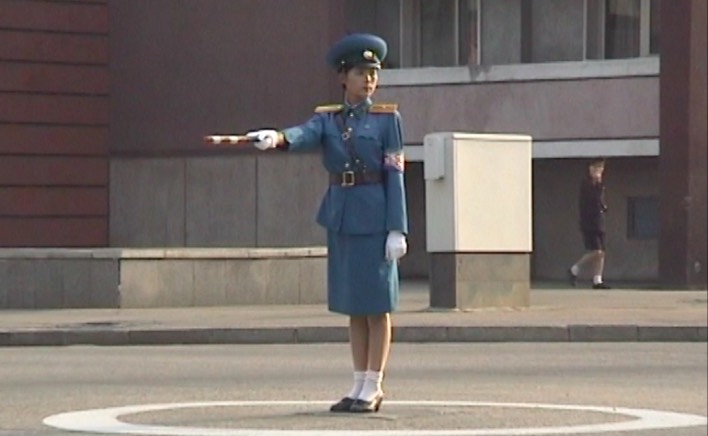
Since “GHOSTS” (2009), made during his studies and set in a reception centre for asylum seekers, Ijäs has favoured voice-over narration built from stories and anecdotes, often accompanied by unsettling electronic music. This restrained approach invites viewers to question what they hear and consider the distance between narrative and image. In “Belgrade Forest Incident …and What Happened to Mr. K?” (2020), that distance opens up an examination of narratives that seek to conceal the circumstances surrounding the assassination of journalists. In “On the Art of the Set Design” (2018), filmed in North Korea and drawing on Kim Jong Il’s ideas about cinema and set design, the boundary between staging and reality becomes even less certain.
This laconic neutrality takes on a particularly disturbing dimension in “PICNIC: In Light Invisible to the Human Eye” (2026). The film brings together online reviews of locations along the border between Israel and Gaza, where leisure and the contemplation of the landscape coexist with the proximity of devastation. Ijäs records these accounts and events, leaving viewers space to form their own emotional responses and judgements, while a critical irony emerges from the relationship between sound and image. His documentaries thus hold up an unsettling mirror: we watch others regarding the pain of others, or seeking answers to the material problems generated by the excesses of consumer society.
Presented at Porto/Post/Doc in two parts, the programme dedicated to Jan Ijäs forms part of the international Cinéstesia programme exchange, an initiative by Espoo Ciné. Supported by the Saastamoinen Foundation, Cinéstesia encourages dialogue between cinema and the visual arts, exploring moving image practices and the continually evolving territory they share.
